What "3 ingredient" really means here
Let's be honest about the count before we start. The three ingredients are peanut butter, sugar, and an egg. Chocolate chips are the fourth thing that goes into the bowl — and every "3 ingredient chocolate chip cookie" recipe you've ever seen makes the same quiet exception, because the chips are what make it a chocolate chip cookie. Want to keep the number literal? Press the chips onto the tops of the dough balls instead of stirring them through, and call them a topping.
What makes three ingredients work is what each one does. Peanut butter supplies the fat and the protein, which is why there is no butter here and no flour. Sugar is not only sweetening — it dissolves as the cookies bake, keeping the middles soft and giving the edges something to crisp against. The egg holds everything together and adds the moisture that turns a stiff paste into scoopable dough. That is the whole formula, and it explains the texture: tender rather than crunchy, with a peanut butter flavor that leads the way.
What you need
For about 18 cookies:
- Creamy peanut butter — 1 cup (256 g). A no-stir style gives the most predictable results. If yours is natural, stir the oil back in before you measure; dry, separated peanut butter is the most common reason these cookies crumble.
- Granulated sugar — 1 cup (200 g). Use 3/4 cup (150 g) if you like a less sweet cookie. Packed brown sugar works too, and makes the result softer with a little more depth.
- One large egg — about 50 g without the shell. Room temperature if you have time; it blends in more smoothly.
- Chocolate chips or chopped chocolate — 1/2 cup (85 g), plus a small handful for pressing on top. Chunks give you puddles, chips hold their shape, and either one is right.
- Optional — 1/2 teaspoon vanilla extract, a pinch of fine salt, and flaky salt for the tops.
You will also want a medium bowl, a sturdy spoon (this dough is thick), a rimmed baking sheet, parchment paper, and a 1.5-tablespoon scoop or two spoons.
How to make them, step by step
1. Mix the peanut butter, sugar, and egg
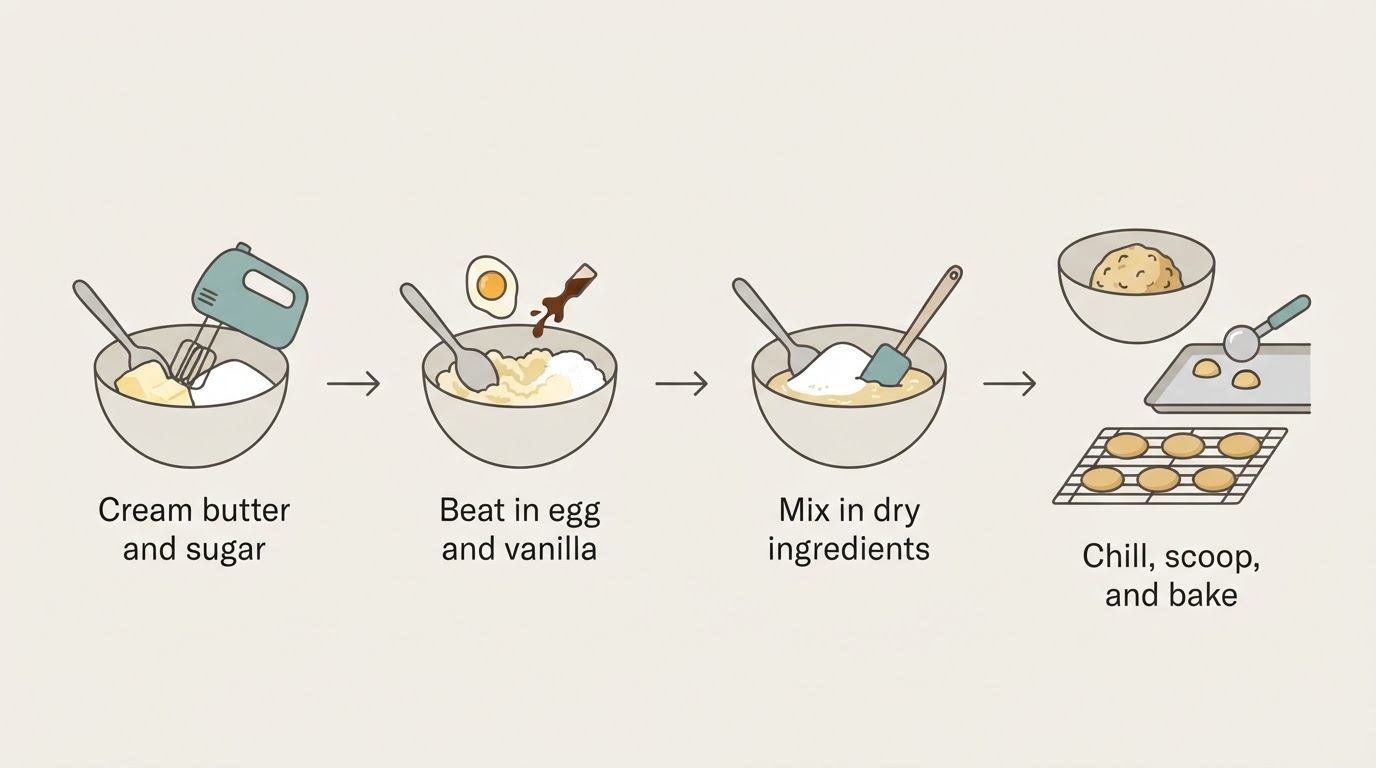
Stir the peanut butter, sugar, and egg together with the spoon, adding the vanilla and fine salt if you are using them. It will look sandy for a moment, then come together into a thick, glossy paste in about a minute. Stop when it is smooth — there is no flour to overwork here, but there is also nothing to gain from beating it hard.
2. Stir in the chocolate chips
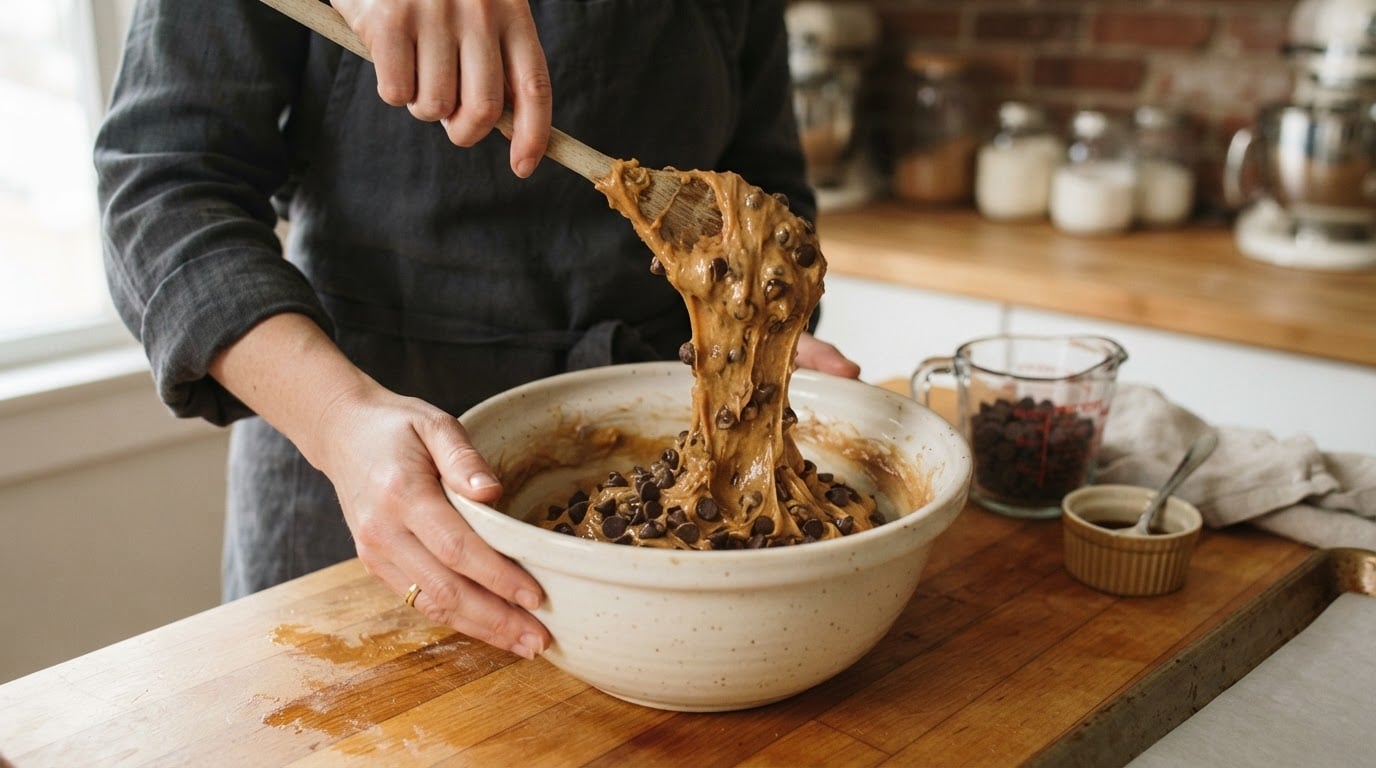
Fold in the 1/2 cup of chips with a few strokes. If you are pressing chips onto the tops later, set that small handful aside now.
3. Chill the dough for 30 minutes if you can
Cover the bowl and refrigerate it for about 30 minutes, or up to two days. Cold dough spreads less, so the cookies bake up thicker with softer middles, and the flavor deepens while it rests. In a hurry? Bake it right away — expect slightly thinner cookies. You can also park the scooped dough in the fridge for 10 minutes while the oven heats, which helps more than it sounds like it should.
4. Heat the oven and set up
Heat the oven to 350°F (175°C) with a rack in the middle. Line a baking sheet with parchment. Scoop the dough into 1.5-tablespoon balls and set them about 2 inches apart, then press two or three reserved chips onto the top of each one.
5. Bake for 10 to 12 minutes
Bake until the edges are set and barely golden and the centers still look puffed, pale, and slightly underdone. That is 10 to 12 minutes in most ovens. Turn the pan halfway through if your oven runs uneven. Do not wait for the tops to brown — these go from soft to dry in a couple of minutes.
6. Let them set on the pan
Leave the cookies on the pan for 5 minutes before you touch them. That rest is what turns a fragile, puffy cookie into one you can lift without it collapsing. Move them to a rack afterward if you are storing them, or eat them warm, which is the best version.
What the finished cookies look and taste like
The edges come out pale gold and set, with a soft, slightly puffy middle and a few shallow cracks across the top. Warm, they bend before they break and the chocolate is molten. Once cooled, they stay soft with a gentle chew and a crisp rim, and the flavor runs peanut butter first, then sweetness, then chocolate. They are even softer on day two.
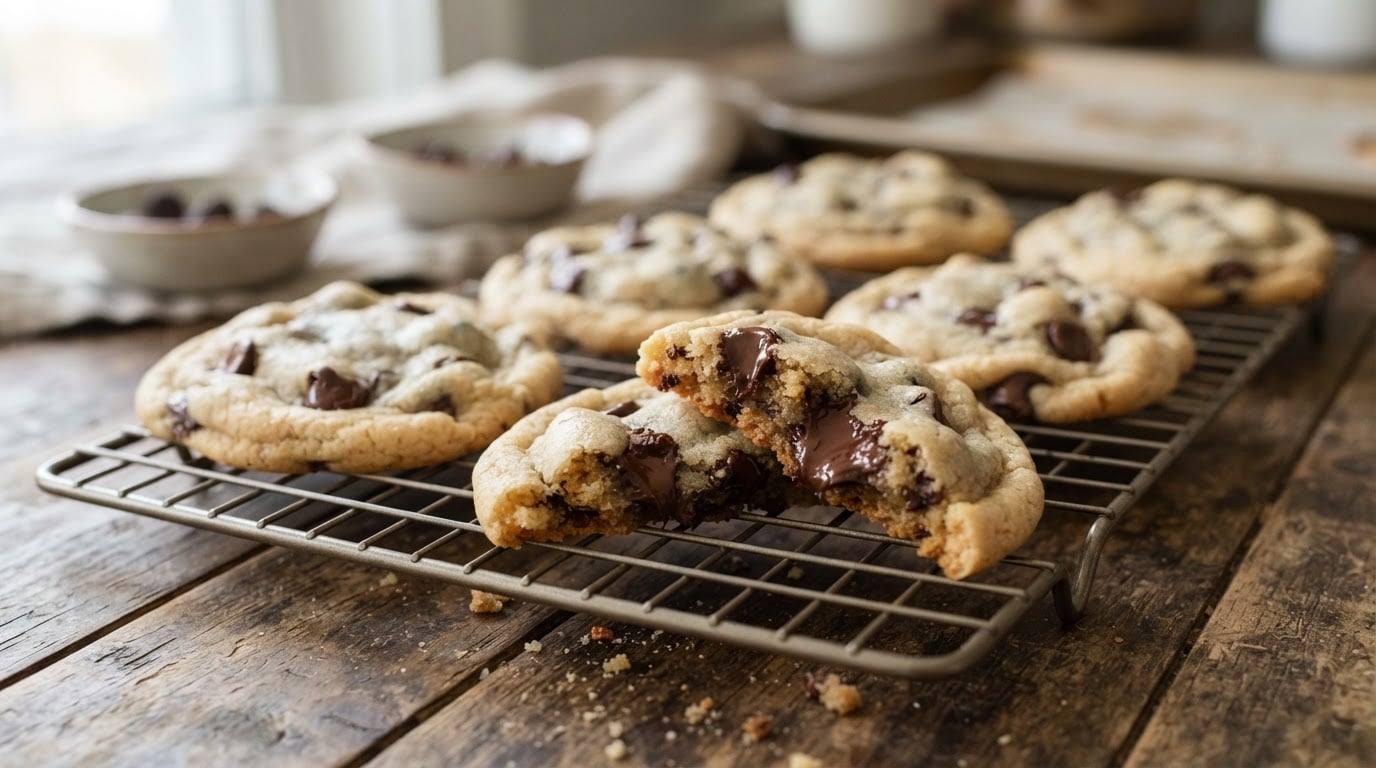
Expect about 18 cookies from one batch at this size. It helps to know the trade you are making, too: with no flour and no butter, these are tender and a little dense — closer to a soft peanut butter cookie with chocolate chips than to a crisp, bakery-style chocolate chipper. If crisp is what you want, bake them 1 to 2 minutes longer and let them cool completely on the rack before you store them.
Troubleshooting
What happened | Why it happens | What to do |
|---|---|---|
Cookies spread into flat discs | Warm dough, separated peanut butter, or a hot pan | Chill the dough for 30 minutes, stir natural peanut butter thoroughly before measuring, and let the pan cool between batches |
Dough is crumbly and will not hold | Cold, dry peanut butter, or a little too much sugar | Knead in a teaspoon of water with your hands; measure by weight next time |
Cookies taste dry or hard | They were baked past the soft-center stage | Pull them at 10 minutes while the middles still look underdone; they finish setting as they cool |
Tops look greasy and shiny | The peanut butter's oil separated, or the egg was beaten hard | Stir the peanut butter back together and mix just until smooth |
Chips sink or fall out | Warm dough | Press chips on top right before baking and keep the dough cold |
Cookies stick to the pan | No parchment, or they were moved too early | Line the pan and give them the full 5-minute rest |
Too sweet for your taste | One cup of sugar is a lot | Cut it to 3/4 cup (150 g) and add a pinch of fine salt |
Variations that stay simple
- Brown sugar cookies. Swap the granulated sugar for 1 cup packed light brown sugar (200 g). The cookies come out softer and more caramel-like.
- A different nut butter. Almond or cashew butter behaves almost the same way. Sunflower seed butter works too, but the dough is looser, so chill it well.
- Banana-oat cookies — three ingredients, chips included. Mash 2 very ripe bananas (about 1 cup, 240 g), stir in 1 cup rolled oats (90 g) and 1/2 cup chocolate chips (85 g), and let the mixture sit for 10 minutes so the oats absorb the moisture. Bake at 350°F (175°C) for 12 to 15 minutes. They come out soft, oaty, and barely sweet — a breakfast cookie more than a dessert one, with no added sugar, no flour, no egg, and no nuts.
- Mix-ins. Chopped toasted nuts, white chocolate, or dried cherries all work here. Keep the total to about 3/4 cup so the dough still holds together.
If you want to keep baking
If this batch disappears the way it usually does, there is a whole shelf of cookie recipes at The Rustic Bakehouse to keep the tin full. The matcha white chocolate cookies in the Cookies collection use eight ingredients and bake in 10 to 12 minutes, and they run on the same habits you just practiced: measure carefully, chill the dough for about 30 minutes so it spreads less and tastes deeper, and pull the tray while the centers still look soft.

Felo product screenshot.
Make ahead, storage, and freezing
- Dough in the fridge: covered, up to two days. Scoop and bake straight from cold, adding a minute to the bake time.
- Baked cookies: airtight at room temperature for four to five days. A slice of bread in the container keeps them softer.
- Frozen dough: scoop balls onto a sheet, freeze until solid, then bag them for up to three months. Bake from frozen at 350°F (175°C), adding 2 to 3 minutes — no thawing needed.
- Frozen cookies: up to two months. Thaw at room temperature, or warm one for 10 seconds in the microwave.
- Because the dough contains a raw egg, do not eat it raw. The baked cookies are worth the wait.
Questions that come up
Are these cookies gluten free? They are if every package is certified gluten free. Peanut butter, sugar, an egg, and chocolate chips contain no wheat, but labels vary, so check the packages if it matters for someone at your table.
Do I really have to chill the dough? No. It bakes straight from the bowl and tastes just as good. Chilling mainly controls spread, so without it you get slightly thinner cookies.
How long do they stay soft? Four to five days in an airtight container at room temperature, and longer in the freezer. They are softest on day two.