Overnight Sourdough Focaccia Recipe
Let’s be honest—great focaccia is less about fancy technique and more about time, oil, and a starter that’s actually awake. This overnight sourdough focaccia recipe walks you from mix to golden pan with a crisp, olive-oil bottom and a soft, holey crumb—using only your starter.
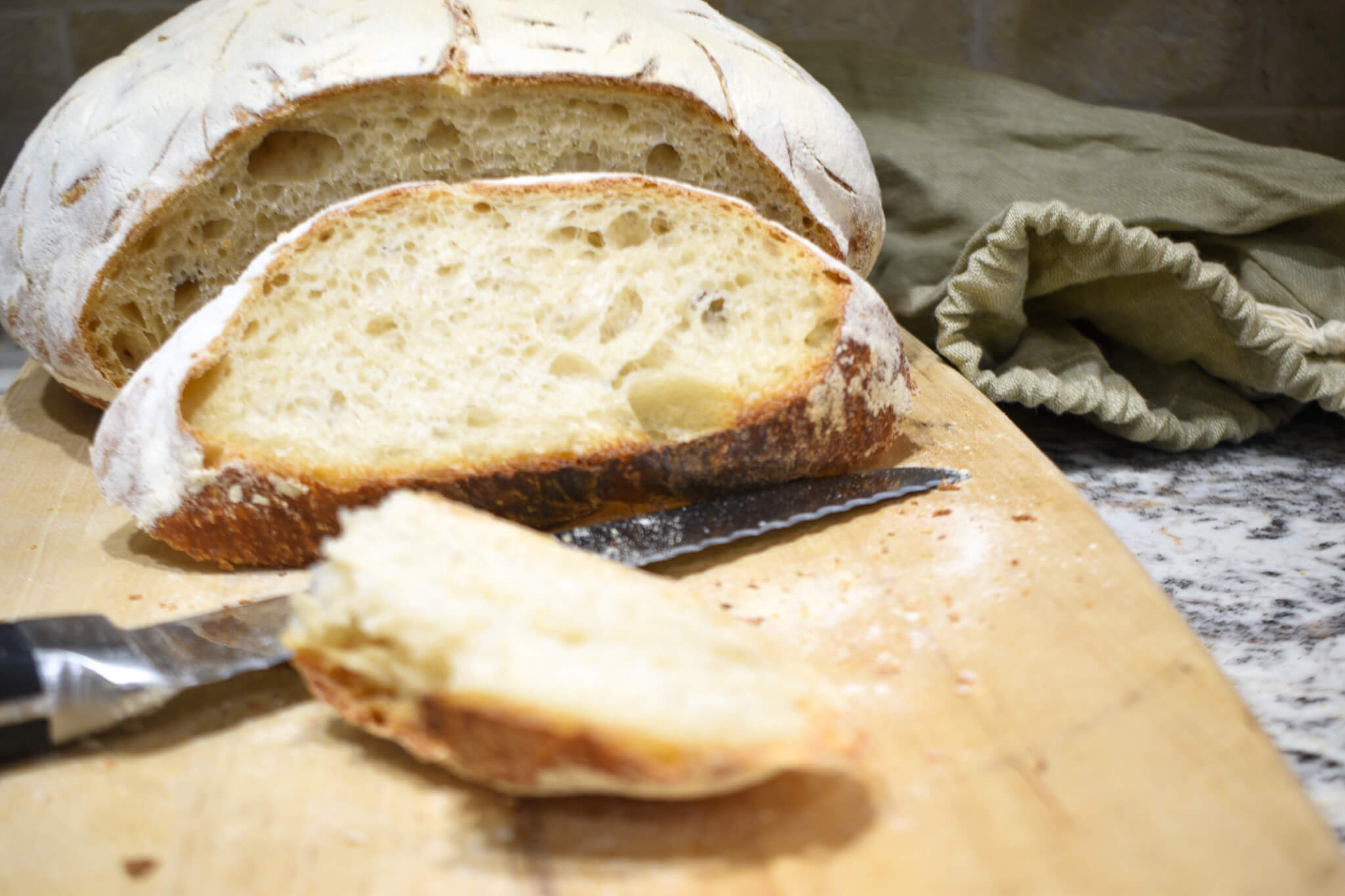
A kitchen-friendly overnight schedule
Focaccia rewards patience more than muscle. Use this timeline as a starting map, then shift blocks earlier or later based on how fast your starter doubles and how warm your kitchen runs.
Overnight focaccia plan
| Block | When | What you do | What “done” looks like |
|---|---|---|---|
| Feed starter | Morning (Day 1) | Feed so the starter peaks when you mix | Doubled, bubbles; yeasty-sweet |
| Mix + rest | Late Afternoon (Day 1) | Combine starter, water, flour; add salt and oil | Dough looks shaggy then smoother |
| Bulk Rise | 2–4 hours (Day 1) | Cover and let rise; gentle folds | Airy, jiggly, 30–50% larger |
| Cold proof | Overnight (8–18h) | Oil the pan, transfer dough, cover | Dough relaxes to edges; bubbly |
| Dimple + Top | Morning (Day 2) | Warm on counter; dimple; oil and salt | Fingertip dimples hold lift |
| Bake | When oven is hot | High heat bake; cool in pan briefly | Deep golden top, audible crisp |
Starter strength and kitchen temperature move every clock. If your dough is sluggish at room temp, give bulk more time—not more yeast.
The focaccia you’re aiming for
You’re chasing a shallow, oil-kissed slab: bronzed on top, shatter-crisp where it meets the pan, and open inside with irregular holes.
The Bottom
Crisp, deep golden, slightly fried from the oil film. It should sound hollow-crisp when you tap the underside.
The Crumb
Soft and moist, not cotton-dry. Irregular holes—some larger pockets from dimpling and long fermentation.
The Flavor
Mild sourdough tang from the overnight cold proof. Olive oil and salt in the foreground; toppings as accents.
Starter amount, dough formula, and flour
Base Formula
- Active starter: 75 g (about ⅓ cup)
- Warm water: 390 g (about 1⅔ cups)
- Bread flour: 500 g (about 4 cups)
- Fine salt: 10 g (about 1¾ tsp)
- Olive oil (in dough): 20 g (1½ Tbsp)
- Optional honey: 10–15 g (2–3 tsp)
Equipment
- Large mixing bowl & spatula
- 9×13 in rimmed metal pan
- Kitchen scale
- Clean towel or pan cover
Overnight Sourdough Focaccia
Confirm the starter is at peak. It should look domed and webbed with bubbles and roughly double within 4–8 hours of feeding.
Mix flour and water. Stir 500 g bread flour with 390 g water until no dry flour remains. Cover and rest 20–30 minutes.
Add starter, salt and oil. Mix in 75 g active starter, 10 g salt, and 20 g olive oil. Pinch and fold with a wet hand for 3–5 minutes.
Strengthen with folds. Over the next 60–90 minutes, do 2–3 sets of coil folds. Stop when the dough feels billowy.
Bulk Rise. Let rise on the counter until aerated and 30–50% larger (usually 2–4 hours).
Oil the pan. Pour 1–2 Tbsp olive oil into a 9×13 in metal pan. This is your crisp-bottom insurance.
Transfer and cold proof. Release dough into the pan. Gently stretch toward corners. Cover and refrigerate 8–18 hours.
Morning warm-up. Take the pan out and let soften on the counter 30–90 minutes until puffy.
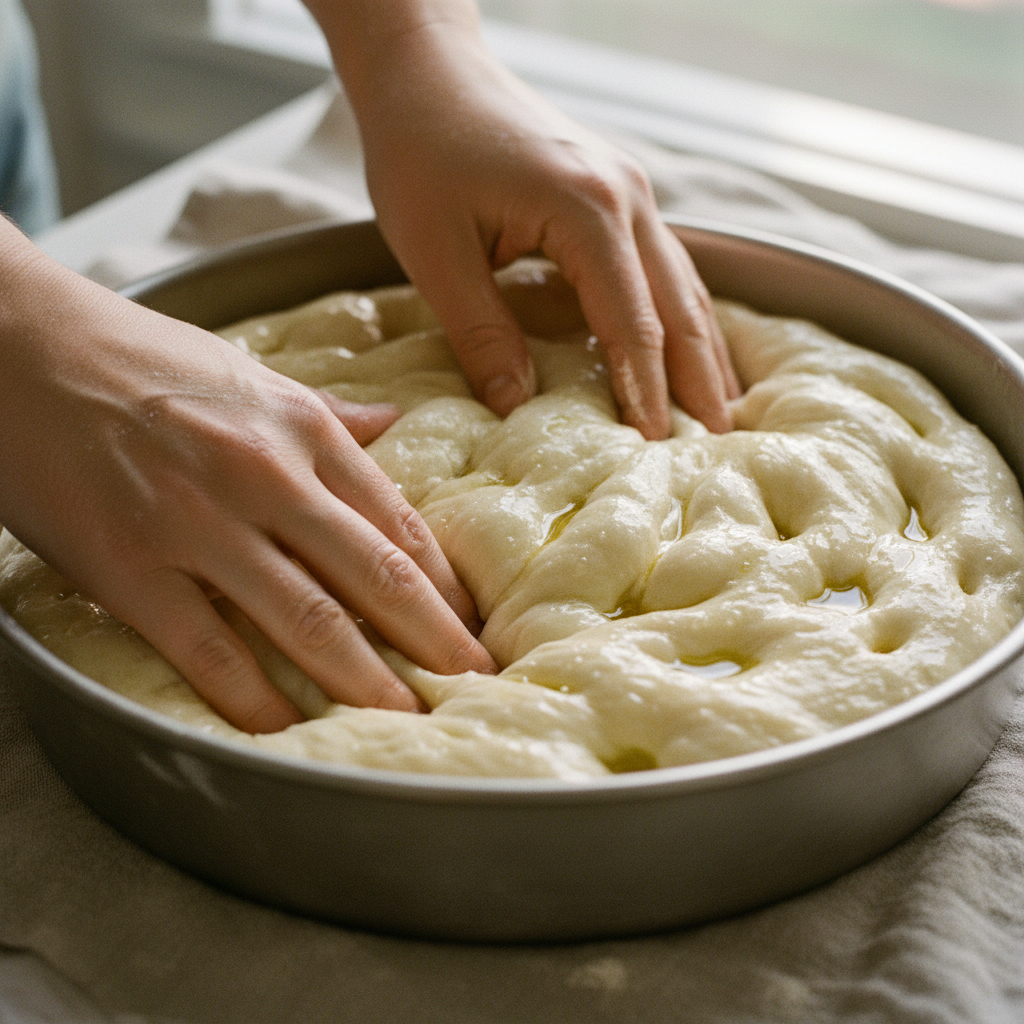
Dimple. Oil your fingertips. Press straight down to the pan floor in evenly spaced dimples. Bubbles should remain.
Oil, salt, toppings. Drizzle olive oil to pool in dimples. Scatter flaky salt and desired toppings.
Bake hot. Preheat to 450°F (230°C). Bake 20–30 minutes until deeply golden and the bottom is crisp.
Cool. Rest in pan 10–15 minutes, then move to a rack to maintain crispness.
Protecting the holes
Stretch in stages
Place dough in the center and coax it outward. If it fights you, rest it for 10-15 minutes. Gluten relaxes on a break.
Dimple late, dimple deep
Dimple only after the dough is pillow-soft. Press to the pan, don't claw sideways. Sideways pressure smears bubbles.
Oil is part of the structure
A generous pan film lets the dough slide and fry. Oiled hands beat flour-dusted hands here.
Making focaccia with discard
Discard is unfed starter. It adds flavor, but not the same rising power. For an open crumb, active starter is the main path.
- Swap up to 50–100 g with discard only if you include enough active starter to leaven.
- Expect a slower bulk; give it more counter time until aerated.
- Do not “fix” sluggish dough with commercial yeast—that's a different recipe.
Get a freebie in your inbox
Join the newsletter and get the free Baker Recipe Notes Template—so you can spot your baking trends instead of relying on memory.

Focaccia Troubleshooting
Why is my sourdough focaccia dense with tiny holes?
The dough likely never got airy in bulk. Next time, wait for a true double on the starter and extend room-temp bulk until the dough jiggles.
How long should overnight sourdough focaccia ferment?
Typically 2–4 hours bulk at room temp, then 8–18 hours in the fridge, plus a morning warm-up.
My dough won’t stretch to the corners. What now?
Cover and rest 10–15 minutes. Tight dough is under-relaxed gluten, not a sign you should tear it.
Why is the bottom soft instead of crisp?
Use more pan oil, bake in metal, and confirm a full preheat to 450°F.
Bake the pan, then bake it again
Your first sourdough focaccia teaches you your kitchen’s timing. The second pan is where the holes get more confident.