Sourdough Bagels: Overnight Cold-Retard, Boil, and Bake
By Jess | The Rustic Bakehouse
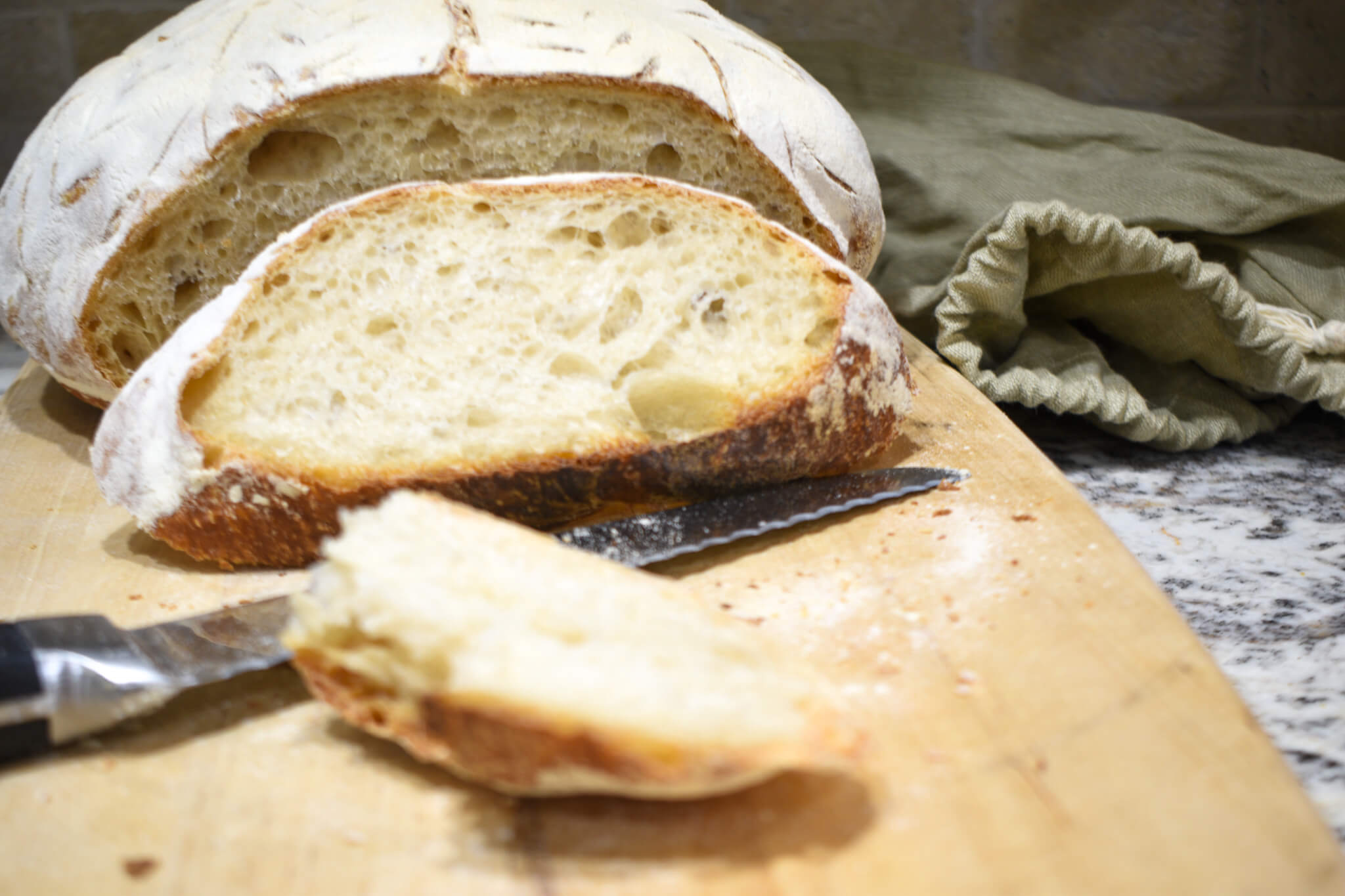
Sourdough bagels are everything a store-bought bagel is not: a dense, tight crumb that holds up to a knife, a glassy sheen on the crust from a quick boil, and a gentle tang you only get from a live starter. They take two days — most of that hands-off in the fridge — and the method is more forgiving than a freeform loaf because the shape is already decided before the dough goes cold.
What Makes a Sourdough Bagel Different from a Regular Bagel
Conventional bagels use commercial yeast and are often proofed for an hour or two before they go into the boiling water. Sourdough bagels use a live starter instead — no packets, no instant yeast — which means the fermentation happens slowly, over hours or overnight. That longer fermentation does two things: it develops a mild but real tang, and it changes the gluten structure so the crumb stays tight and chewy rather than soft and pillowy.
The other difference is the boiling step. All bagels are boiled before they bake, but sourdough bagels tend to hold their shape better through the bath because the cold-retarded dough is firm and easy to handle. The boil also gives the crust its characteristic shine — more water in the pot gives a thicker crust; honey or molasses added to the water deepens both colour and flavour.
What You Need
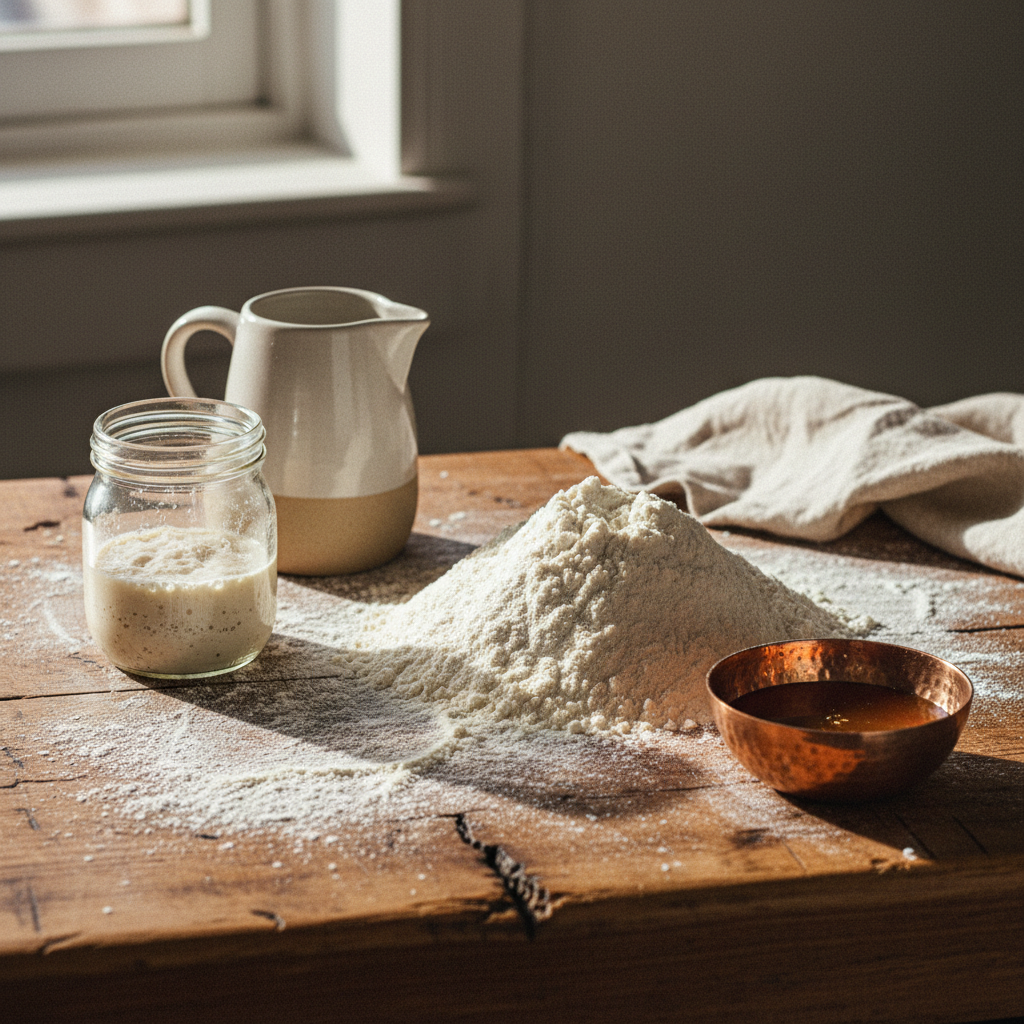
The dough is lean — bread flour, water, starter, salt, and a small amount of honey or barley malt syrup. No oil, no eggs. The bagel gets its chew from the flour and the fermentation, not from enrichment.
Bread Flour (500g)
High-protein bread flour gives the chewy bite; all-purpose works but the crumb will be slightly softer.
Active Starter (100g)
Fed and at peak—bubbly, doubled, and passes the float test for natural leavening depth.
Water (275g)
Room temperature water to hydrate the stiff bagel dough and form the tight structure.
Honey or Syrup (15g)
Adds a slight sweetness and helps achieve that deep amber traditional crust colour.
Discard Version Alternative
To use sourdough discard instead of active starter: replace the 100 g active starter with 100 g unfed discard and add ¼ tsp instant yeast to give the fermentation a small push. Every other step is the same.
Is Your Starter Ready?
Before mixing the dough, the starter needs to be active and at or near peak. A starter at peak has doubled in size since its last feeding, domes at the top, and smells yeasty and slightly tangy — not sharp or alcoholic.
"Drop a small spoonful into a glass of water. If it floats, the starter has enough gas production to leaven the bagels. If it sinks, give it another hour and retest."
If you are using the discard version, skip the float test — the instant yeast handles leavening and the discard is just there for flavour.
Learn to build and maintain a starter from scratchCombine
Mix bread flour, water, starter, salt, and honey. Mix until no dry flour remains. Cover and let rest for 20 minutes (autolyse) to hydrate fully.
Knead
Knead for 8–10 minutes until smooth and springy. Aim for a firm ball that passes the windowpane test — stretching thin enough to see light through.
Bulk Fermentation
Leave at room temperature (68–74°F) for 4–6 hours until grown by 50%. It will look puffed and feel airy, with small bubbles near the surface.
Mix the Dough and Let It Ferment
"Bagel dough is stiff because less water makes the crumb tight and keeps the ring from spreading."
Discard note: If using the discard version with added instant yeast, bulk fermentation will be closer to 3–4 hours.
How to Shape Sourdough Bagels
Bagel shaping is one of the easier tasks in bread baking — there is no tension-building or scoring involved.
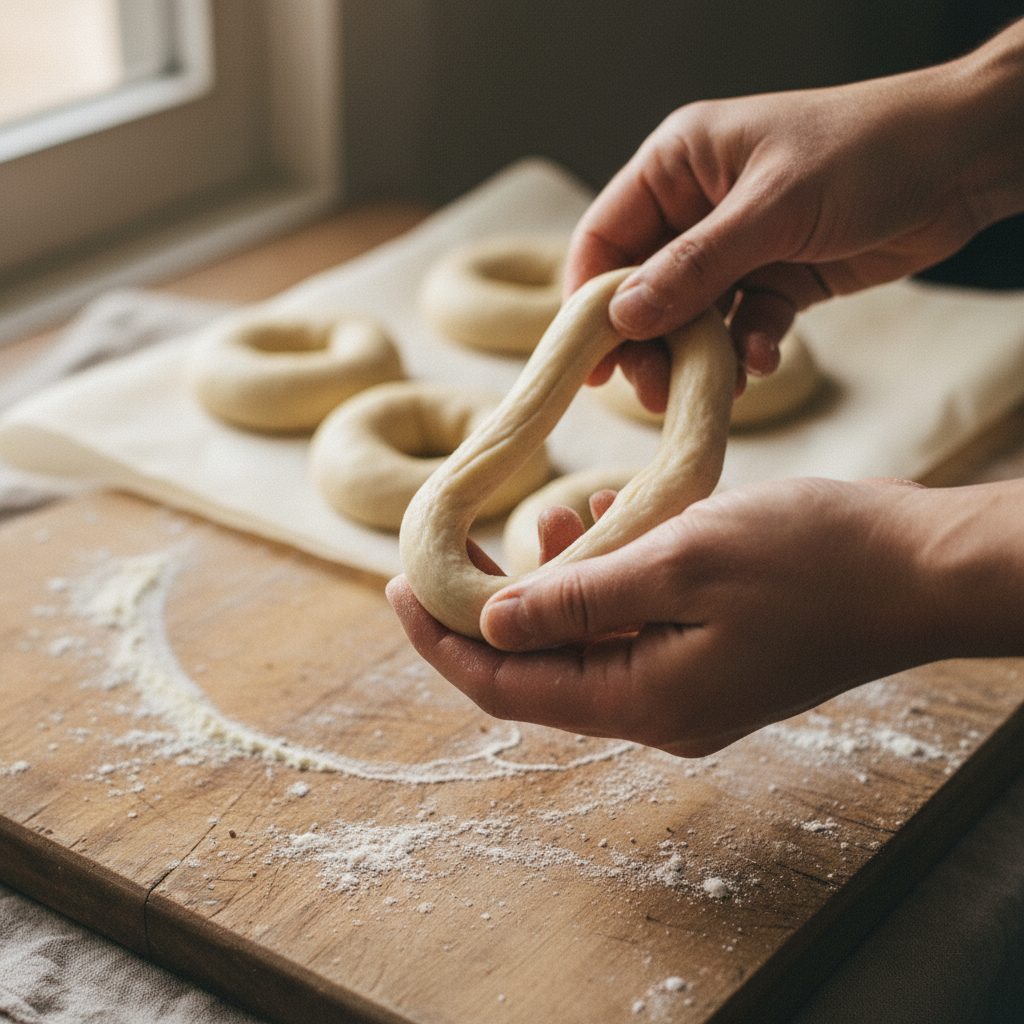
Method 1: Rope and Loop
Best for beginners
- 1.Divide dough into 8 equal pieces, roughly 112 g each.
- 2.Roll each piece into a rope about 25–28 cm long. Taper ends slightly.
- 3.Wrap around your hand, overlap ends by 3-4 cm, and roll on the counter to seal. The hole should be 4-5 cm wide.
Method 2: Poke-through
Fastest method
- 1.Divide and pre-shape each piece into a smooth ball.
- 2.Rest balls uncovered for 5 minutes.
- 3.Push two fingers through the centre and gently stretch the hole outward until 4–5 cm wide.
The hole closes during baking, so start bigger than you think!
The Overnight Cold Retard — Why It Matters
Moving the shaped bagels into the fridge slows yeast activity almost to a stop, while the acid-producing bacteria keep working slowly. This results in a more developed flavour, a dough that is much firmer and easier to handle, and a crust that blisters better in the oven.
The Schedule
- Evening: Shape bagels after daytime bulk fermentation.
- Overnight: Refrigerate uncovered for 8–16 hours.
- Morning: Go straight from fridge to boiling pot.
The Sweet Spot
10–14 hours is ideal. Beyond 18 hours, the dough may become puffy and slack, producing a less chewy result.
Ready? It should spring back slowly when pressed gently.
Boiling the Bagels — Water, Time, and What to Add
The boil is non-negotiable. It gelatinises the outside of the dough, which sets the shape, creates the glossy crust, and gives the bagel its signature density.
The Setup
Use 8–10 cups of water. Add 1 tbsp honey (for shine), barley malt syrup (for traditional flavor), or 1 tsp baking soda (for crispness).
Boiling Time
Boil each bagel for 45–60 seconds per side. Shorter = thinner crust; Longer = tougher, denser crust.
After the Bath
"Lift each bagel out with a slotted spoon and return it to the baking sheet. If topping with seeds or seasoning, sprinkle immediately while the surface is still wet and sticky."
— Baker's Note
Baking — Temperature, Time, and Colour
220°C / 425°F
20–25 Mins
93–96°C
Preheat the oven to 425°F. A hot oven is important for the crust to set and colour before the interior overcooks. Bake on the middle rack, rotating the pan once at the 12-minute mark.
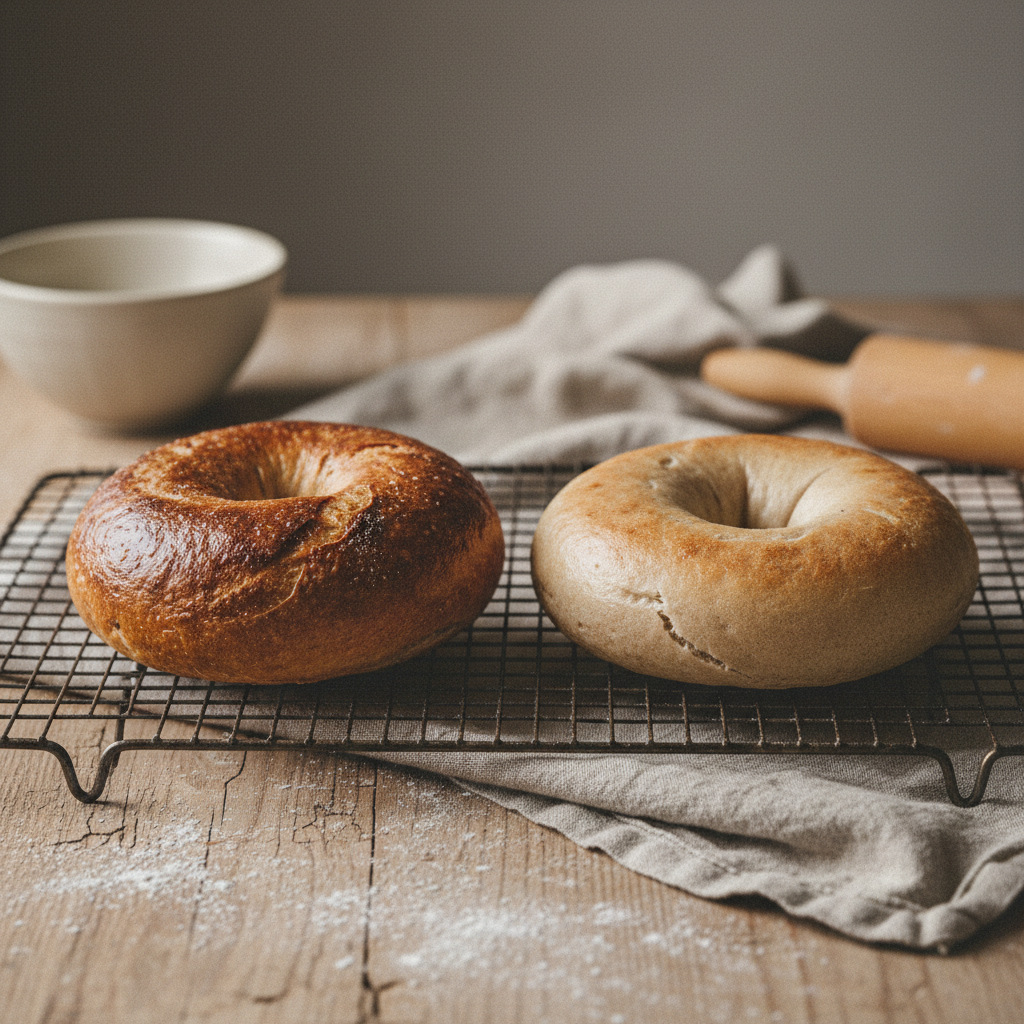
Colour cues: The bagels are done when the tops are a deep amber — not pale gold. Let them cool on a wire rack for at least 20 minutes before cutting; the crumb is still setting during this time.
When Things Go Wrong
Troubleshooting common bagel hurdles — what happened and how to fix it for your next batch.
Bagels Spread Flat
Likely over-fermented or the starter was too ripe. Shorten bulk fermentation by 30–60 minutes next time. Make sure holes are larger than they look — they close significantly.
Tough and Rubbery Crust
Caused by too long a boil or water that wasn't simmering vigorously. Confirm the boil time is 45–60 seconds per side, not longer.
Pale and Soft Crust
The oven wasn't hot enough or the boiling step was skipped. Ensure a full 425°F preheat and that every bagel goes through the boiling water.
Sourdough Bagels Recipe
Ingredients
- Bread Flour 500g
- Active Starter 100g
- Water 275g
- Sea Salt 10g
- Honey 15g
- For the water: 1 tbsp honey/syrup or 1 tsp baking soda
Instructions
- Combine dough ingredients; rest 20m.
- Knead 8–10m until smooth. Bulk ferment 4–6h at room temp (68-74°F) until puffed.
- Divide into 8 pieces (~112g). Shape into rings with a 4-5cm hole.
- Refrigerate uncovered 8–16h (Overnight Cold Retard).
- Boil 45–60s per side in simmering water with additives.
- Bake at 425°F for 20–25m until deep amber. Cool 20m.
Baker's Notes
Go straight from fridge to boiling pot — no room-temperature bench time needed. For discard version: replace starter with 100g discard + 1/4 tsp instant yeast (bulk rise 3-4h).
More Sourdough Recipes from The Rustic Bakehouse
How to Make Sourdough Bread
The full beginner guide to building a starter and baking your first loaf.
For Beginners →Sourdough Focaccia Recipe
A high-hydration, forgiving bake with a crispy bottom and airy crumb.
For Casual Baking →Starter Feeding Calculator
Figure out the exact amounts for your next feed in seconds with precision.
For Precision Bakers →Sourdough Bagels: Common Questions
Can I make these without an overnight rest?
Yes — shape, proof at room temp for 1–2 hours until puffed, then boil and bake. The flavour will be milder and dough softer to handle.
Why do I have to boil them?
Boiling gelatinises the starch, setting the shape and creating the signature chewy, shiny crust. Without it, you just have a bread roll.
What is the difference between adding honey, malt syrup, or baking soda to the water?
Honey gives golden color and sweetness. Barley malt syrup gives deep amber and traditional flavor. Baking soda produces the crispest chew.
How do I store sourdough bagels?
Room temp for 2–3 days in a sealed bag, or slice and freeze for up to 3 months. Frozen bagels go straight to the toaster.
Get the Baker Recipe Notes Template — Free
Track your bakes, spot what works, and stop repeating the same mistakes. The free template lands in your inbox the moment you sign up.